 منبر العراق الحر منبر العراق الحر

مقالات مشابهة


منبر العراق الحر :….. حوار دنيا صاحب-…العراق…..
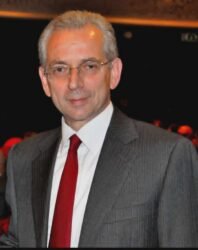
أسس البروفيسور يانيس فيكاس أكاديمية فرسالا لتقديم مناهج تعليمية متفردة تجمع بين الفلسفة، الحضارات القديمة، والفنون والموسيقى. ويقود الأكاديمية نحو العالمية، مقدمًا برامج تعزز التفكير النقدي والفلسفي وتنمّي مهارات البحث والحوار لدى الطلاب والمفكرين. اكتسبت الأكاديمية سمعة مرموقة بفضل محتواها العلمي الغني ومنصتها الإلكترونية التي تربط بين سبعين مدينة حول العالم، موفرة مساحة لتبادل المعرفة والثقافة عبر المقالات، الصور، المسرح، الموسيقى، والفنون البصرية.
يؤكد البروفيسور فيكاس على ربط الفلسفة بالقيادة، بحيث يتحوّل الفكر إلى فعل قيادي ناجح، ويصبح المواطن الواعي ركيزة أساسية لبناء مجتمع صالح. ويرى في الفن والجمال وسيلة لفهم الحكمة في الحياة وتحفيز العقل والنفس على بلوغ آفاق روحية جديدة. ومن خلال دراسة الحضارات القديمة والفلسفة، تعمل الأكاديمية على تعزيز التسامح وتوحيد الثقافات المتنوعة للبشرية، مما يجعل الحوار معه نافذة فريدة نطل منها على الفكر الفلسفي والمعرفة بالثقافات العالمية.
مرحبًا بك، أستاذنا الجليل. إنه لشرف وسرور أن نستقبلك اليوم في هذا اللقاء المرموق نتطلع إلى الاطلاع على رؤاك الأكاديمية والثقافية الثرية والاستفادة من خبراتك القيّمة في مجالات البحث الفلسفي والتعليم والفنون. إن الحوار معك يُثري الجمهور ويضيف بعدًا ثقافيًا وفكريًا وعلميًا فريدًا.
• كيف تعرف هويتك الشخصية ونشأتك الثقافية، وبأي طرق أسهمت هذه العوامل في تشكيل رؤيتك الفكرية والفلسفية؟
• لقد شكّل رؤيتي الفكرية والفلسفية الأفراد والمعلمون والأساتذة، وهم رجال ذو رؤية.
• أي الفلاسفة أو المفكرين كان لهم التأثير الأعمق في تطوير أفكارك ونظرياتك؟
• الفلاسفة قبل سقراط، سقراط، أبيقور، ماركوس أوريليوس، وفيلسوف عصر النهضة جوردانو برونو.
• بصفتك مؤسس أكاديمية فرسالا، ما هو الدور الرئيس الذي تؤديه الأكاديمية في ترسيخ الفكر والفلسفة والتعليم الثقافي على مستوى العالم؟
• تقدّم الأكاديمية في المدارس الابتدائية والمتوسطة والثانوية دورتين أساسيتين: الأولى حول الحضارات القديمة (مصر، اليونان، روما، إيران، الهند، الصين، اليابان، المكسيك، بيرو)، والثانية حول الفلسفة (الفلاسفة قبل سقراط، سقراط، أفلاطون، أبيقور، الرواقيون، ماركوس أوريليوس، الفلسفة الأفلاطونية الحديثة، وفلسفة عصر النهضة).
كما يتيح موقع الأكاديمية على الإنترنت https://academyfarsala.gr/ للطلاب وأصدقاء الأكاديمية والزوار فرصة مشاركة المقالات والصور حول الحضارات القديمة، المواقع الأثرية المتاحف، المسرح اليوناني القديم (أسخيلوس وسوفوكليس)، الفلسفة لوحات عصر النهضة، المعارض الفنية وليم شكسبير، الأوبرا، ريتشارد فاغنر الشعر، والموسيقى الكلاسيكية.
• كيف تصف تجربتك في التعاون الثقافي مع دول العالم؟ وما رؤيتك الفلسفية لهذا المحور الرئيس في تعزيز وتوسيع العلاقات الدبلوماسية الدولية؟
• تضم أكاديمية فرسالا مجلسًا استشاريًا مؤلفًا من 18 عضوًا، ومجلسًا استشاريًا دوليًا مؤلفًا من 32 عضوًا ودائرة أصدقاء تضم 200 عضو يربطون بين 70 مدينة حول العالم تسهم البرامج الأكاديمية، وخاصة دراسة الفلسفة والمقارنة بين الحضارات القديمة، في تعزيز التسامح والمساهمة في توحيد الأشكال الثقافية المتنوعة للبشرية.
• كيف تفسر العلاقة بين الفلسفة والقيادة كما تناولتها في كتابك “الفلسفة والقيادة ؟
• للفلسفة مهمتان مترابطتان: إحداهما شخصية والأخرى سياسية. بمعنى آخر، إلى جانب أهمية الفلسفة في النمو الشخصي للفرد، يتضح أيضًا دورها في الدولة: كيف تتحول المعرفة إلى فعل، وكيف يقود النظرية إلى التطبيق، وكيف تتجلى القدرات الأخلاقية أو الروحية للفرد، والتي تتطور عبر التعليم، داخل المجتمع وبالتالي، فإن هدف الفلسفة هو ضمان وجود مواطنين نشطين وواعين يساهمون في الصالح العام.
• في كتابك “دروب الفن والحكمة”
هل ترى في الفن وسيلة لفهم الفلسفة العميقة للوجود؟
• كان الفلاسفة يرون أن الجمال هو تجلٍ لشعاع متألق يسطع عبر الحواس على النفس والعقل، ويحفّز الخيال فالجمال يهيّئ النفس لسلوك مسار تصاعدي نحو الحكمة، تمامًا كما تقود الجمالية إلى الأخلاق. الجمال الطبيعي هو الخطوة التي تقود الإنسان إلى المحبة التي تميّز العالم النفسي وصولًا إلى السعادة الروحية، التي تميّز العالم الروحي. بالنسبة للفلاسفة الجمال هو السبيل الذي يحاول الفنانون، وخاصة الرسامون والشعراء من خلاله التعبير عن الحقيقة واحتواء شعاع النور الذي يحوّل العمل العادي إلى عمل مقدّس.
• في كتابك «أساطير العالم القديم» كيف تدرك تأثير الأساطير في فهم الإنسان وتشكيل الواقع والفكر؟ وهل ما زالت الأساطير تؤثر فينا في العصر الحديث؟
• يتم الانتقال من النظرة الأسطورية إلى النظرة الفلسفية مع الفلاسفة ما قبل سقراط قبلهم كان هناك الأبطال والحكماء، وبعدهم ظهر الفلاسفة. جمع فيثاغورس، طاليس، سقراط وأفلاطون بين المنظومات الفلسفية
إذ تحتوي أعمالهم على عناصر من التفكير المنطقي والإدراك الأسطوري معًا. وكان أرسطو الوحيد الذي استبعد كل العناصر الأسطورية من أعماله
في أثينا في عهد بريكليس كانت الثقافة الاحتفالية متقدمة للغاية كلما ازدادت نجاحات المدينة وثروتها وقوتها، زادت التضحيات والاحتفالات المقدمة للآلهة. وبجانب اهتمامهم بالقضايا السياسية والعسكرية، أبدى الأثينيون اهتمامًا بالغًا بترسيخ الطقوس والاحتفالات. فقد أسس بريكليس نفسه المسرحيات العامة الندوات الاحتفالية، المواكب، والمسابقات الموسيقية، كما أنشأ المعهد الموسيقي عام 440 قبل الميلاد. وكانت الدولة تتحمل جزءًا من نفقات هذه الفعاليات بينما كان المواطنون الأثرياء يتكفلون ببقية المصاريف.
أعتقد أن هوميروس من خلال ملحمتَيْه المشهورتين، الإلياذة والأوديسة، لا يكتفي بتمجيد أو الجمع بين أكثر نوعين مميزين من نماذج الأبطال: أبطال مثل أخيل الذين يتميزون بالشجاعة والإرادة والعمل الصائب، وأبطال مثل أوديسيوس الذين يتميزون بالمهارة، الفعالية والعقل الإيثاري الذي يربط البطل بنفسه وبالطبيعة، بل إن تأثير هذه الأعمال مستمر حتى العصر الحديث.
• في كتابك «العالم، المدينة والإنسان: نصوص فلسفية»، ما رؤيتك لهذه المفاهيم، وهل يمكن تطبيق أفكارك على تحديات الحضارة المعاصرة؟
• اقترح فلاسفة ما قبل سقراط في القرنين السادس والخامس قبل الميلاد بعض المبادئ الكونية لتفسير كل الظواهر الطبيعية، في سعيهم لمواءمة النظرة الأسطورية للعالم مع النظرة العلمية. وقد وضعوا أسس الفلسفة ووجّهوا العقل البشري نحو التأمل العقلاني للعالم، وطوروا مجالات الكوسموغونيا، الكونيات، الفلك الرياضيات، الأحياء الأنثروبولوجيا والفيزياء
وفقًا لوجهة نظرهم، هناك مادة أولية تضمن الوحدة الأساسية للعالم. ولكل فيلسوف من فلاسفة ما قبل سقراط تتوافق هذه المادة الأولية مع عالم الحواس، وخصوصًا مع عنصر مميز من العالم الطبيعي مثل النار، الهواء أو الماء.
كما اعتقد ديموقريطوس بوجود نوعين من المعرفة: نوع يكتسب عبر الحواس (المعرفة الحسية) ونوع آخر عبر العقل (المعرفة الفكرية). ومن هذين النوعين يصف المعرفة العقلية بأنها حقيقية ويعطيها مصداقية لتكوين حكم عقلاني، بينما يصف المعرفة الحسية بأنها غامضة وينكر كونها خالية من الخطأ في تمييز الحقيقة.
اعتقد سقراط أن المنهج الجدلي ليس الحكمة نفسها، بل هو الطريقة التي تسعى لاكتشاف جوهر الأشياء والحقيقة، والتي تقود إلى الحكمة والسعادة الداخلية. بالنسبة لسقراط هدف الإنسان ليس المعرفة بحد ذاتها بل السعادة الداخلية، أي اليودايمونيا
يرى أفلاطون أن الإنسان مركب من العقل والروح والجسد، وأن الروح البشرية تتكون من ثلاثة أجزاء: العقلانية، والوجدانية والشهوية ووفقًا لأفلاطون، الهدف الرئيسي للتربية هو تطوير الإنسان جسديًا ونفسيًا وروحيًا، وخاصة تشكيل شخصيته الأخلاقية
أما الهدف الثاني من التعليم فيتمثل في تكوين مواطنين وسياسيين صالحين. هذا الهدف مترابط مع الأهداف الأخرى وخاصة الهدف الأخلاقي، لأن العدالة ووحدة الدولة معرضة للخطر فقط نتيجة لعيوب مواطنيها.
في كتاب «السياسي»، يذكر أفلاطون أن المواطنين يتم تشكيلهم من خلال التعليم وفق مفاهيم الخير والعدالة والجمال ومن ثم يتعلمون التعاون بانسجام من أجل الصالح العام وفي «القوانين»، يُشاد بأهمية التعليم في تشكيل المواطنين الصالحين والعادلين والفاضلين ووفقًا لأفلاطون، فإن التعليم الحقيقي الوحيد هو ذلك الذي يقود المواطنين منذ الطفولة إلى الفضيلة، ويعلمهم كيفية الحكم والخضوع للحكم وفق القانون. ويرى أفلاطون أن التعليم إلزامي وموجه لجميع المواطنين بلا استثناء، لأن حصر فوائده على عدد قليل من الأفراد لا يعود بالنفع الحقيقي على الدولة؛ بينما، على العكس يكون النفع عظيمًا عندما يتلقى جميع المواطنين التعليم.
يعتقد أبيقور أن معايير الحقيقة تقوم على الحواس والمشاعر والمفاهيم المسبقة والصور الذهنية. وتعد الحواس مصدرًا حقيقيًا للمعرفة لأنها تقدم دليلًا على جوهر الأشياء وتثير المشاعر التي تُخزن في الذاكرة وتساعدنا المشاعر، وخاصة مشاعر اللذة والألم، على التعرف بشكل أفضل على الأشياء التي ينبغي السعي وراءها أو تجنبها.
• ما الذي ألهمك لكتابة كتاب عن جوردانو برونو؟ وكيف تقيم مكانته في تاريخ الفلسفة والفكر، وهل تُعد أفكاره فصلًا أساسيًا في الفلسفة الحديثة؟
• ألهمتني نظرية التوفيق بين الأضداد لكتابة كتاب عن جوردانو برونو. فقد اعتقد برونو أن التناغم يظهر حيثما وجدت الأضداد. وكما هو معروف في الأساطير اليونانية، فإن الإلهة الجميلة هارمونيا (Αρμονία) هي ابنة آريس إله الحرب وأفروديت. وتعد هارمونيا الإلهة التي تجمع الأضداد وتنسق بينها، وهي أفروديت جديدة. كان زوجها كادموس مؤسس مدينة طيبة اليونانية
وفقًا لنظرية التوفيق بين الأضداد هناك طاقتان كونيّتان أوليتان، قطبان متضادان ولكنهما متكاملان، وكلاهما تجلٍّ للواقع الواحد. ومن هذه الأزواج من الأضداد تنبثق كل مظاهر العالم ومن الأمثلة على ذلك: النهار والليل في نظرية هيراقليطس الفلسفية العدالة والظلم في أنكسيماندر، المحدود واللانهائي في فيثاغورس النور والظلام في بارمنيدس، الحب والصراع في إيمبيدوكليس.
• إن إعادة اكتشاف فلسفة عصر النهضة اليوم يجب أن تُعد فصلًا أساسيًا في الفلسفة الحديثة، لأنها تساعد الإنسان على أن يصبح مواطنًا أفضل وأكثر حكمة يساهم في الصالح العام وتساعده على امتلاك رؤية شمولية للكون، وإعادة اكتشاف الطبيعة، وخلق علاقات جديدة معها وتنمية وعي بالمسؤولية والمحاسبة تجاهها.
• كيف تقيم دور دمج الفلسفة والفنون والأنثروبولوجيا في تعميق فهم ودراسة المجتمعات الإنسانية المعاصرة؟
• يمكن تعريف التعليم بأنه سعي فني وأخلاقي وفلسفي وديني وعلمي. وقد يوحد التعليم جميع الأمم في العالم ضمن رؤية ثقافية مشتركة تسعى لاكتشاف الحقيقة وخدمة الإنسانية وهدف التعليم هو مساعدة جميع أفراد المجتمع، وخاصة الطلاب، ليصبحوا واعين لقدراتهم، ويحددوا قيمهم الجوهرية، ويكتسبوا إحساسًا متكاملاً وحيويًا بالذات ليصبحوا مواطنين أفضل وأكثر حكمة.
ΑΚΑΔΗΜΙΑ ΦΑΡΣΑΛΩΝ
Donia
Professor Yannis Fikas Leads the Farsala Academy Towards the Convergence of Global Cultures
______________________
Between Philosophy, Arts, and Ancient Civilizations: A New Humanistic and Enlightening Language
Interview by Donia Al-Sahb – Iraq
Professor Yannis Fikas founded the Farsala Academy to offer distinctive educational curricula that integrate philosophy, ancient civilizations, arts, and music. He leads the academy towards global recognition, presenting programs that foster critical and philosophical thinking while developing students’ and scholars’ research and dialogue skills. The academy has earned a prestigious reputation thanks to its rich academic content and its online platform, which connects seventy cities worldwide, providing a space for the exchange of knowledge and culture through articles, images, theater, music, and visual arts.
Professor Fikas emphasizes the connection between philosophy and leadership, whereby thought is transformed into effective leadership, and the conscious citizen becomes a fundamental pillar for building a virtuous society. He regards art and beauty as means to comprehend life’s wisdom and to stimulate the mind and soul towards new spiritual horizons. Through the study of ancient civilizations and philosophy, the academy promotes tolerance and unites the diverse cultures of humanity, making a dialogue with Professor Fikas a unique window into philosophical thought and global cultural knowledge.
Welcome, esteemed
Professor. It is an honor and a pleasure to receive you today at this distinguished gathering. We look forward to exploring your rich academic and cultural insights and to benefiting from your valuable experiences in the fields of research, education, and the arts. A dialogue with you enriches the audience and adds a unique cultural, intellectual, and scientific dimension.
-How do you define your personal identity and cultural upbringing, and in what ways have these factors shaped your intellectual and philosophical vision?
-Individuals, Teachers and Professors, men with vision have shaped my intellectual and my philosophical vision.
-Which philosophers or thinkers have had the most significant influence on the development of your ideas and theories?
-Presocratics, Socrates, Epicurus, Marcus Aurelius and the Renaissance philosopher Giordano Bruno.
-As the founder of the Farsala Academy, what is the academy’s principal role in advancing thought, philosophy, and cultural education worldwide?
-The Academy offers at Primaries schools, Gymnasiums and Lyceums two main courses, one on ancient civilizations, Egypt, Greece, Rome, Iran, India, China, Japan, Mexico, Peru and another one on Philosophy, Presocratics, Socrates, Plato, Epicurus, Stoics, Marcus Aurelius, Neoplatonic, Renaissance Philosophy.
Students, friends of the Academy and visitors have the opportunity through the website of the Academy
https://academyfarsala.gr/
to share articles and images on Ancient Civilizations, Archaeological Sites, Museums, Ancient Greek Theatre Aeschylus Sophocles, Philosophy, Renaissance Paintings, Galleries, William Shakespeare, Opera, R. Wagner, Poetry, Classical Music.
-How would you describe your experience of cultural cooperation with countries around the globe, and what is your philosophical perspective on this key axis for fostering and expanding international diplomatic relations?
-The Farsala Academy has an Advisory Board of 18 an International Advisory Board of 32, and a Circle of Friends 200 members that connects 70 cities all over the world. The Academic Programs and mainly the study of philosophy and the comparative study of ancient civilizations cultivate tolerance and contribute to the unity of the various cultural forms of humankind
-How do you interpret the relationship between philosophy and leadership as discussed in your book Philosophy and Leadership?
-The mission of philosophy has two reference levels, which are, nevertheless, interdependent; the one is personal and the other one political. In other words, along with the importance of philosophy on one’s personal growth, its role in the state is also emphasized; i.e. how knowledge is transformed into action, how theory leads to practice, how each individual’s moral or spiritual abilities, which develop through education, unfold within society. Thus, the goal of philosophy is to ensure that that there are active and conscious citizens that will contribute to the common good.
-In your book Paths of Art and Wisdom, do you view art as a medium through which the deep philosophy of existence can be understood?
-Philosophers believed that beauty is the manifestation of a radiant beam, which shines through the senses on the soul and the mind of humans and activates imagination. Beauty prepares the soul to fulfill an ascending course towards wisdom in the same way that aesthetics leads to ethics. The natural beauty is the step that leads humans to love, which characterizes the psychological world, and ultimately, to eudaimonia, which characterizes the spiritual world. For philosophers, beauty is the way through which artists and mainly painters and poets try to express the truth and captivate a beam of light which will turn the profane work into sacred work.
-In your book Myths of the Ancient World, how do you perceive the influence of myths on human understanding and the shaping of reality and thought? Do myths continue to affect us in the modern era?
-It is with the Presocratics that the passage from the mythical to the philosophical perception takes place. Before the Presocratics there are the heroes and the sages, while after the Presocratics there are the philosophers.
Pythagoras, Thales, Socrates and Plato combine both philosophical systems. In their works, there are elements of both logical reasoning and mythical perception. Aristotle was the only one to discard all mythical elements from his work.
In Periclean Athens the festive culture was very advanced. The greater the successes, the wealth and the power of the city, the more the city owed to the gods in terms of sacrifices and celebrations. Along with their interest in political and military issues, Athenians appeared to be equally interested in the establishment of rituals and celebrations. It was Pericles himself that established public plays, festive symposia, processions and music competitions, and he had the conservatory constructed in 440 BC. The city-state was partly in charge of the cost of the spectacles, but it was the wealthy citizens that took care of the expenses of a celebration.
I believe that Homer with his two famous epic poems, the Iliad and the Odyssey, not only praises and reconciles two of the most characteristic hero archetypes, that of Achilles who stands out for his bravery, willpower and right action and that of Odysseus who stands out for his skillfulness in action, effectiveness and altruistic intellect that bonds the hero with himself and nature but continues to affect us in the modern era.
-In your book The World, the City, and Man: Philosophical Texts, what is your perspective on these concepts, and can your ideas be applied to contemporary civilizational challenges?
-The Presocratic philosophers of the 6th and 5th century B.C. proposed some universal principles to interpret all natural phenomena in their effort to harmonize the mythological world outlook with the scientific one. They laid the foundations of philosophy, directed human mind towards a rational reflection of the world and developed cosmogony, cosmology, astronomy, mathematics, biology, anthropology and physics.
According to their worldview, there is a primary substance that ensures the fundamental unity of the world. For every Presocratic philosopher this primary substance corresponds to the world of senses and particularly, to a distinct element of the natural world, such as fire, air and water.
Democritus also believed that there are two kinds of knowledge, the one acquired through the senses (sensory knowledge) and the other through the intellect (intellectual knowledge). Of these two, he calls the one deriving from the intellect ‘genuine’ ascribing reliability to it, so as to form reasonable judgment, while he calls the other deriving from the senses ‘dark’ denying that it is unerring with regard to the discernment of what is true.
Socrates believed that the dialectical method is not wisdom itself but the method which seeks for the essence of things, the truth, and which leads to wisdom and inner happiness. For Socrates the goal of humans is not knowledge but inner happiness, eudaimonia.
Plato believes that humans are composed of the mind, the soul and the body and that the human soul is composed of three parts, the rational, the spirited and the appetitive. According to Plato, the main goal of education is the physical, psychological and spiritual development of humans and especially the molding of their moral character.
The second most important goal of education for Plato is molding rightful citizens and politicians. This goal is interwoven with its other goals and mainly the ethical one, because justice and state unity are put under threat only by the imperfections of its citizens.
In the Statesman, Plato mentions that through education citizens are molded within the ideas of good, justice and beauty and hence, they learn to cooperate harmoniously for the common good.
In the Laws, the importance of education for the molding of rightful, just and virtuous citizens is praised. According to Plato, the only real education is the one that has led citizens to virtue since childhood and has taught them to govern and to be governed following the law.
For Plato, education is compulsory and is intended for all citizens without exception, because when the goods of education are reserved only for a few individuals, there is no substantial benefit for the state; whereas, on the contrary, the benefit for the state is great when all citizens are educated.
Epicurus believed that the criteria of truth are the senses, the emotions, the preconceptions and the mental images. The senses constitute a real source of knowledge as they provide evidence for the substance of their objects and evoke emotions that are stamped on memory. The emotions and mainly the ones of pleasure and pain help us to get to know better the things that we should pursue or avoid.
-What inspired you to write a book on Giordano Bruno? How do you assess his place in the history of philosophy and thought, and are his ideas a fundamental chapter in modern philosophy?
– The theory of the harmonization of opposites inspired me to write a book on Giordano Bruno. Bruno believed that harmony appears wherever there are opposites.
As it is known in Greek mythology, the beautiful goddess Harmonia (Αρμονία) is the daughter of Ares -the god of war- and Aphrodite. Harmonia is the deity who connects and harmonizes the opposites. She is a new Aphrodite. Her husband was Cadmus, who founded the Greek city of Thebes.
According to the theory of the harmonization of opposites, there are two primal cosmic energies, two poles which are opposite but complementary to each other and which are both manifestations of the one and only reality. It is from these pairs of opposites that all world manifestations spring. Such examples are Day and Night in Heraclitus philosophic theory, Justice and Injustice in Anaximander, Finite and Infinite in Pythagoras, Light and Dark in Parmenides, Love and Strife in Empedocles.
The rediscovery of the Renaissance philosophy today should be a fundamental chapter in modern philosophy because will help man, to become better and wiser citizen that will contribute to the common good, will help man to acquire a holistic vision of the universe, to rediscover nature, create new relationships with it and develop a consciousness of responsibility and accountability towards nature.
-How do you assess the role of integrating philosophy, art, and anthropology in deepening the understanding and study of contemporary human societies?
-Education could be defined as an artistic, ethical, philosophical, religious, and a scientific quest. Education may unite all the existing nations of the world in a common cultural vision that will search for the truth and serve humanity.
The purpose of education is to help all the members of a given society and especially students who should be aware of their potentials, identify their own core values, acquire a vital and integrated sense of self, and become better and wiser citizens.
ΑΚΑΔΗΜΙΑ ΦΑΡΣΑΛΩΝ